

Types of Software Development to inform your audience and showcase your expertise:
At PayRupees, we understand that software development is not a one-size-fits-all solution. Different business goals require different types of software. From mobile applications to cloud-based platforms, understanding the various types of software development helps businesses choose the right path for innovation and scalability. Each type serves a specific purpose, whether it’s improving user experience, streamlining operations, or enabling secure digital transactions.
One of the most common types is web development, which includes both front-end (user interface) and back-end (server-side logic) development. Web applications are widely used for e-commerce, portals, and business dashboards. Similarly, mobile app development focuses on building Android and iOS applications, a vital part of PayRupees’ services that power secure, on-the-go digital payments and recharges.
Desktop software development is still essential for industries that require robust applications with high processing power and offline functionality, such as finance and engineering. Meanwhile, embedded systems development is crucial for hardware-integrated environments like ATMs, POS machines, and IoT devices—key areas where PayRupees ensures seamless integration of digital payment solutions.
As a tech-driven platform, PayRupees also embraces cloud, API, and DevOps development practices to deliver scalable, secure, and high-performance applications. Whether it’s building APIs for third-party integration or deploying full-scale cloud systems for fintech platforms, our development approach is rooted in agility, efficiency, and reliability—ensuring that our clients are always ahead in the digital economy.
Types of Software Development
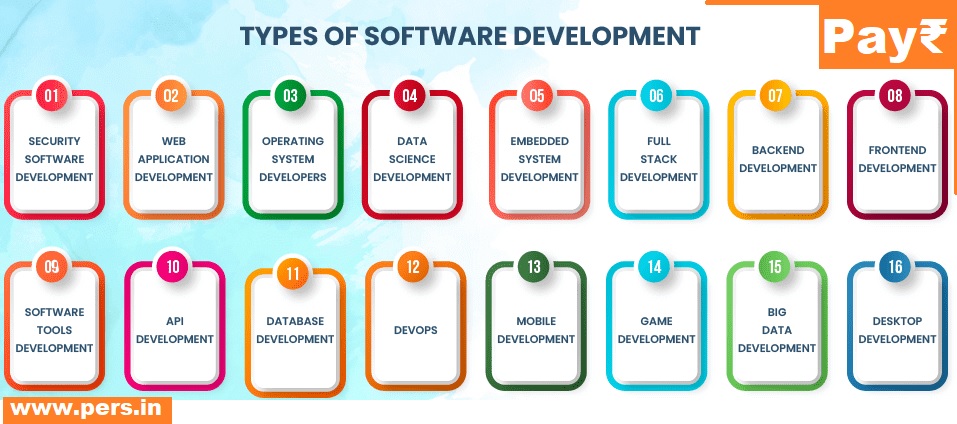
Understanding the Different Types of Software Development
Software development is a vast and ever-evolving field that powers nearly every aspect of our digital lives. From mobile applications to enterprise-level cloud systems, software development involves the creation, deployment, and maintenance of software solutions that serve a variety of purposes. Understanding the different types of software development is essential for businesses, developers, and decision-makers looking to choose the right technology path for their needs.
1. Web Development
Web development focuses on building applications that run in a web browser. This includes both the front-end (what users see and interact with) and the back-end (the server, database, and application logic). Front-end developers typically work with HTML, CSS, and JavaScript, while back-end developers may use languages like PHP, Python, Java, or Node.js. Web development is used for everything from company websites and online stores to complex web applications like CRMs and booking platforms.
2. Mobile App Development
With smartphones becoming the primary device for users around the world, mobile app development is more important than ever. It involves creating apps for Android, iOS, or both (cross-platform). Native app development uses platform-specific languages like Swift (iOS) or Kotlin (Android), while cross-platform frameworks like Flutter and React Native allow developers to write one codebase for multiple platforms. Mobile development is essential for businesses offering on-the-go services, such as banking, e-commerce, and utility recharges.
3. Desktop Software Development
Desktop development focuses on applications that run on personal computers or workstations, often without the need for an internet connection. This type of software is common in areas like graphic design, video editing, engineering tools, and traditional accounting systems. Windows, macOS, and Linux all have different development requirements, and languages like C++, C#, and Java are commonly used. While web and mobile apps dominate consumer space, desktop software remains vital for enterprise and specialized use cases.
4. Embedded Systems Development
Embedded software development involves writing software for devices that are not typically considered computers, such as smart appliances, ATMs, medical equipment, or industrial machines. These systems often run on minimal hardware and are designed for specific tasks. C and C++ are the most widely used languages in this space. Embedded development is crucial for the Internet of Things (IoT) and industries where hardware and software work closely together.
5. Cloud and DevOps Development
Modern applications rely heavily on the cloud to ensure scalability, flexibility, and performance. Cloud development involves building and deploying software on cloud platforms like AWS, Azure, or Google Cloud. It often works hand-in-hand with DevOps, which focuses on automating development, testing, deployment, and monitoring. These practices improve software delivery speed and reliability, making them critical for today’s fast-moving digital services.
Conclusion
From web and mobile apps to embedded systems and cloud-native platforms, the types of software development are diverse and specialized. Each type serves different business goals, technology stacks, and user expectations. At PayRupees, we work with multiple software development models to deliver high-quality, scalable, and secure solutions tailored to various industries and user needs. Whether you’re building a digital product, an enterprise platform, or a fintech solution, understanding these categories helps ensure the right approach from day one.