

“The Future of Mobile Recharge Business in India”, tailored with PayRupees as the voice or source:
At PayRupees, we’ve seen firsthand how the mobile recharge business in India has transformed from local corner stores to advanced digital platforms. With over a billion mobile users and increasing internet penetration, the demand for quick, secure, and user-friendly recharge solutions has never been higher. The shift towards digital payments, especially post-pandemic, has made online recharge not just convenient but essential for millions across the country.
The future of the mobile recharge business lies in technology-driven convenience. With innovations like UPI integration, AI-based personalization, and seamless app experiences, users now expect much more than just a basic recharge. At PayRupees, we are continually evolving to meet these expectations, offering not just mobile recharges but also DTH, utility bill payments, and more—all through a single platform. This integrated approach is key to staying competitive and delivering real value.
Another important trend is the growth of rural and semi-urban markets. As digital literacy spreads and smartphone access increases, these regions are becoming major drivers of growth for the mobile recharge industry. Through our agent and franchise models, PayRupees empowers small businesses and individuals in these areas to offer digital recharge and payment services, creating local employment and expanding financial inclusion.
Looking ahead, the recharge business in India will be shaped by 5G connectivity, IoT devices, and smarter mobile ecosystems. With faster networks and more connected devices, recharging services will become more automated and personalized than ever before. At PayRupees, we are committed to leading this change, ensuring that our users and partners benefit from the latest technology and the growing digital economy.
The Future of Mobile Recharge Business in India
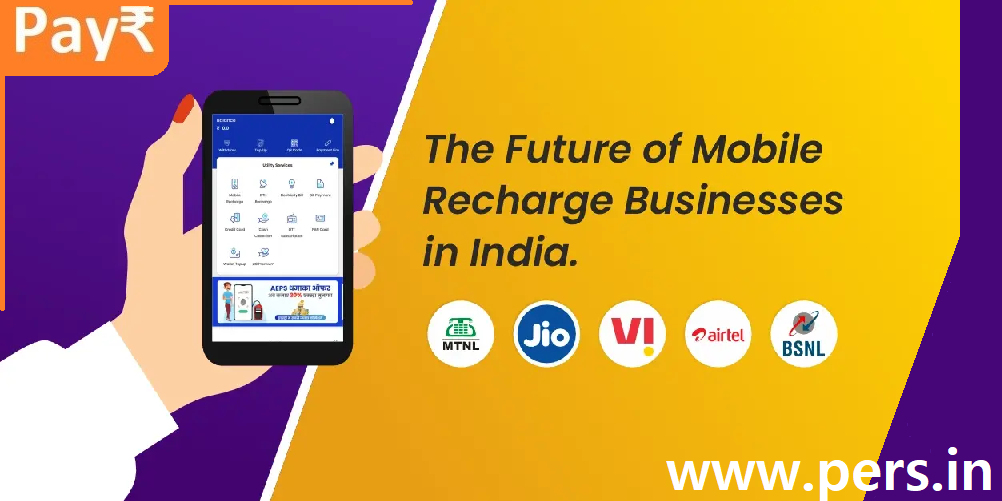
The Future of Mobile Recharge Business in India
The mobile recharge business in India has undergone a massive transformation over the past decade. From physical scratch cards and local recharge shops to online wallets and one-click digital payments, the industry has evolved rapidly. Today, with increasing smartphone penetration, widespread internet access, and the growth of digital payment platforms, the mobile recharge industry is poised for even greater changes in the near future.
One of the key drivers of growth in this sector is digital adoption. As of 2025, India has over 1.2 billion mobile connections, with more than 800 million internet users. This growing user base is becoming increasingly comfortable with online transactions, including mobile recharges. Platforms like Google Pay, PhonePe, Paytm, and others have made the process fast, secure, and seamless. The convenience of recharging anytime and from anywhere has made digital platforms the preferred choice for millions.
Another major factor shaping the future of the mobile recharge business is the rise of Unified Payments Interface (UPI). UPI has revolutionized the way Indians make payments. The integration of UPI into recharge apps allows users to complete transactions with a single click, further streamlining the experience. As more financial services get integrated into these platforms—such as bill payments, insurance, and loan offerings—the recharge ecosystem will become more comprehensive and profitable.
The role of Artificial Intelligence (AI) and machine learning will also grow significantly. These technologies are already being used to personalize user experiences, send smart reminders, offer discounts, and predict user behavior. In the future, AI could help platforms automatically recharge plans based on usage patterns or notify users of better deals suited to their needs.
From a business standpoint, the mobile recharge industry offers lucrative opportunities for entrepreneurs and retailers. Many digital platforms offer agent-based or franchise models, where small business owners can provide recharge services along with utility bill payments, DTH recharge, and other services. This model is especially popular in semi-urban and rural areas where digital literacy is still catching up.
However, the market is becoming increasingly competitive. To stay ahead, businesses will need to focus on customer retention, better user interfaces, and value-added services like cashback offers, loyalty programs, and personalized recommendations. Security and privacy will also be crucial, as users become more aware and concerned about how their data is handled.
Looking ahead, the future of the mobile recharge business in India lies in hyper-personalization, integration, and innovation. As 5G and IoT (Internet of Things) become mainstream, there will be newer ways to offer recharge and connectivity services—possibly through connected cars, wearables, and smart home devices.
In conclusion, the mobile recharge business in India is far from saturated. With evolving technology, changing consumer behavior, and a push towards a cashless economy, the industry is set to grow and diversify. Entrepreneurs, investors, and tech startups should closely watch this space, as it holds the potential to be one of the most dynamic segments in India’s digital economy.